
Let your team lead the second run
Use one real task to turn a demonstration into practice, with the colleague at the controls and the specialist observing what needs to change.
A specialist giving a demonstration already knows the route through the work. They know which page to open, which information to use and what a finished result looks like. The colleague watching has a different job: learning how that route fits into their own working day.
The next session can put that colleague at the controls. Here is a practice format we suggest. It applies to a website editor, an internal application or a process that connects several tools. The purpose is to observe real use and decide what needs another explanation or a change.
Choose work that actually needs doing
Start with one task the colleague expects to repeat. Preparing the next project update is a useful example: it has an input, decisions and an output another person will use.
Agree what completion means before beginning. In this example, the colleague needs to find the current project information, create the update in the shared workspace and check that the intended team can access it. Use the permissions and review steps that already apply to that work.
Keep the session narrow enough to see the whole route. Covering every menu would make it harder to identify the instruction or decision that mattered for this task.
Give the colleague the controls
The specialist can explain the intended result and where the instructions are. The colleague then performs the work. A useful opening agreement is that questions and pauses are welcome because the session is also checking the tool and its guidance.
The specialist observes the point where the person looks for information, hesitates over a label or cannot tell whether a step succeeded. Those observations should describe what happened, without turning them into judgements about the person's ability.
For example, a note might say that the colleague opened two pages while looking for the latest project decision. That gives the team something specific to examine: where that decision belongs and how to find it.
Give help when it is needed
Observation does not require leaving someone stuck. When help is useful, the specialist gives it and notes what the help supplied. Was it a missing fact, an explanation of a term or a reminder about a rule?
That distinction affects the next change. A missing permission needs a different response from an unclear instruction. A confusing label may belong in the product work, while an unfamiliar business decision may need guidance from the team lead.
Keep a short practice note
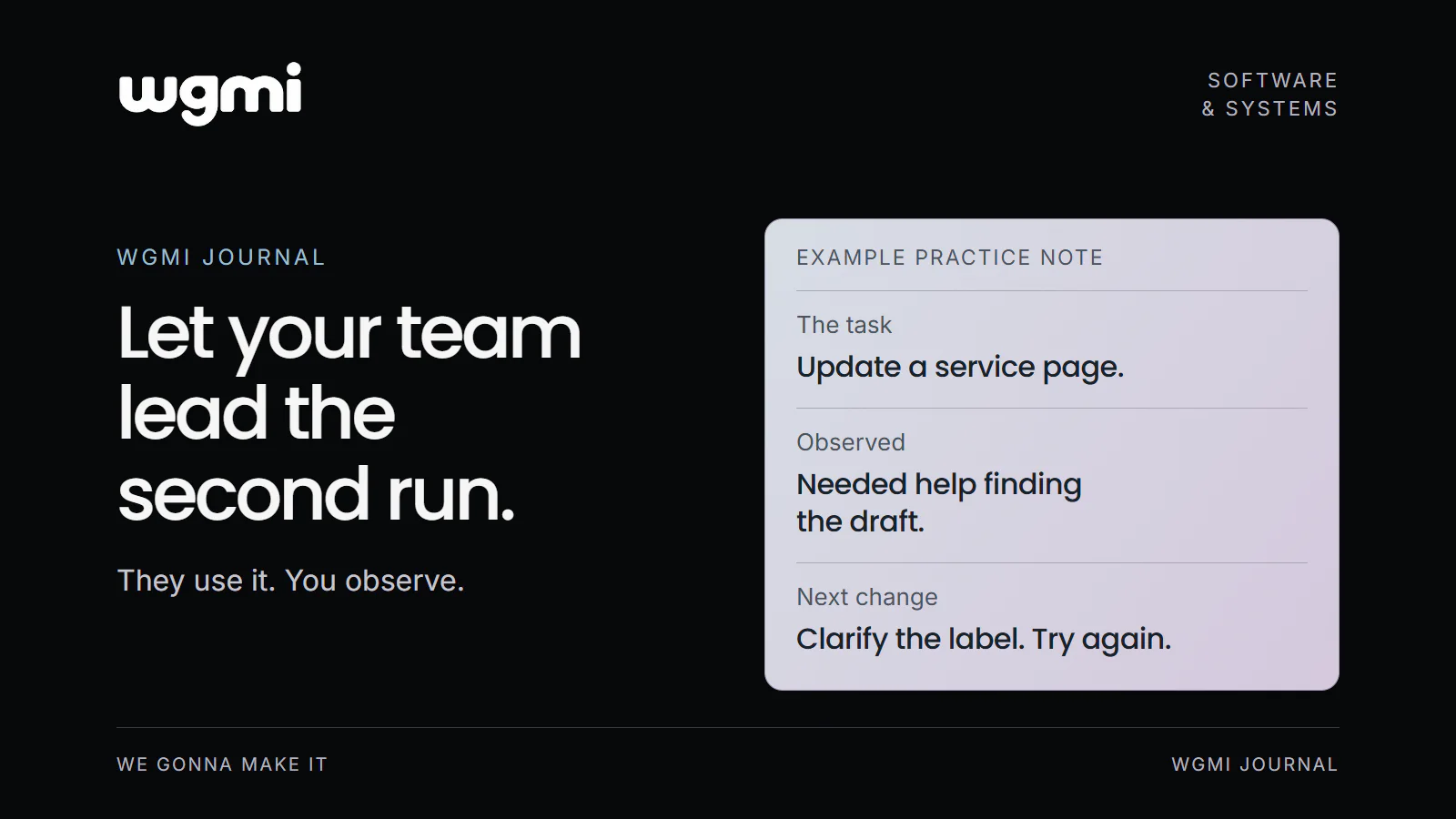
A useful note can have four fields: the step, what happened, the help supplied and the change to try.
This is an illustrative practice note.
Step: Add the latest project decision to the update. What happened: The colleague found two notes and could not tell which was current. Help supplied: The specialist pointed to the dated decision record. Change to try: Put a link to that record beside the instruction for writing the update.
The example describes a possible session, not a client result. Its purpose is to keep the observation close to an action the team can test. The note does not need to score the colleague or turn a single pause into a general claim about adoption.
Try the changed step again
After making the agreed change, let the colleague repeat the relevant step. The question is specific: can they now identify the current decision using the information available?
If they still need help, keep that in the record. A completed task and a completed task with guidance are both useful observations, provided the note describes them accurately. A later run can check whether the change remains useful with a different project or a fresh update.
The session should leave something concrete: the work completed, an account of the help required and a revised instruction or product change to try. That gives the next practice session a purpose. It also gives the specialist a clearer brief for any further support.
Choose one real task for a colleague to lead in your next practice session.
Prepared for WGMI with AI assistance.